



Amir Khan picks winner of potential Anthony Joshua vs Tyson Fury super-fight
Parker-Wardley exclusively on DAZN PPV – Saturday
Former unified world champion Amir Khan still believes the British public wants to see heavyweights Anthony Joshua and Tyson Fury meet in the ring – and is backing his fellow Olympian AJ to edge past the ‘Gypsy King’.
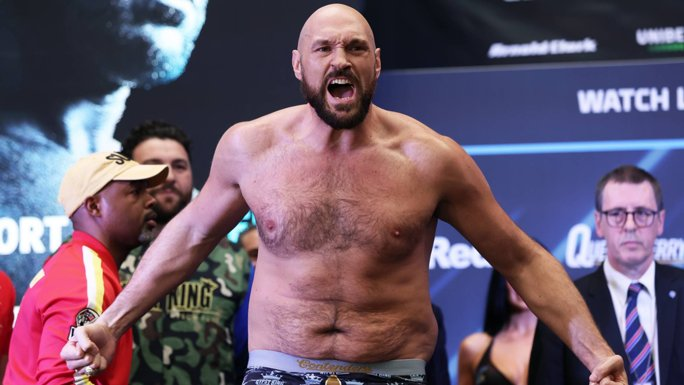
Both Joshua and Fury have enjoyed spells as a world champion in boxing’s most glamorous division, but 2025 has been a quiet year for both men following losses at the end of 2024.
Fury suffered back-to-back defeats by Oleksandr Usyk, whilst Joshua’s recovery from a loss to Daniel Dubois in September 2024 was lengthened by the need for elbow surgery this summer.
For the best part of a decade the two men have been rumoured to fight, with Fury and Joshua’s respective promoters, Queensberry’s Frank Warren and Matchroom’s Eddie Hearn, hinting at returns to the ring for both heavyweights next year. If the domestic dust-up is finally made, Khan feels Joshua could have an advantage due to his greater activity over the years.
Speaking to Betway, Khan shared his thoughts: “With Tyson Fury being out of the ring for such a long time, I’d lean toward Joshua slightly because he’s more active.
“But it is a 50/50 fight, and you would favour more towards Joshua because he has been more of the active fighter, but like I said, it is a close call.”
Although Fury has fought more recently than Joshua, AJ was frequently active in 2023 and 2024, fighting a total of four times inside 13 months, including the Dubois fight. In contrast, Fury fought just once in 2023, with his double-header with Usyk taking place in a seventh-month span. Meanwhile, Fury’s second and third fights with Deontay Wilder took place 20 months apart, and he had almost a year between facing Derek Chisora and Francis Ngannou.
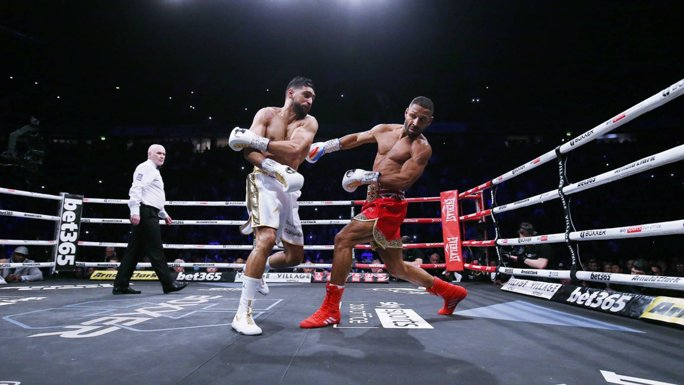
Some fans may argue Joshua and Fury are both past their primes, but Khan is adamant it is still one of the biggest fights to make in world boxing.
“That would be a fantastic fight. Two British heavyweights, even though they don’t have a title, I think it is a fight that the fans want to see. It would be the dream,” Khan said.
“Styles make fights. A boxer vs a puncher — the contrast draws attention, and it would be a fantastic fight.”
Tesla’s 2026 Crossroads: Decoding the Roadster’s Imminent Reveal and Cybercab’s Production Ambitions
As we close out 2025, the automotive world is once again abuzz with Tesla’s latest pronouncements, stirring a familiar mix of electrifying anticipation and seasoned skepticism. Having navigated the ebb and flow of this industry for over a decade, I’ve seen firsthand how Elon Musk’s ambitious timelines often shape, and sometimes stretch, expectations. The recent shareholder meeting on November 6th, 2025, served as a fresh reminder, with Musk outlining a provisional April 1, 2026, reveal for the long-awaited production-spec Roadster and the simultaneous commencement of Cybercab robotaxi production at Gigafactory Texas. This isn’t just about two new vehicles; it’s about the very trajectory of automotive innovation, sustainable mobility solutions, and Tesla’s continued push into the future of transportation.
These announcements, while exciting, land in a market significantly more mature and competitive than the one Tesla operated in just a few years ago. With EV market trends 2025 showing a diverse landscape of formidable competitors and evolving consumer demands, Tesla’s ability to execute on these promises is more crucial than ever. The stakes are incredibly high, not just for the company’s valuation but for its reputation as a consistent deliverer of groundbreaking technology. We’re looking at a fascinating period ahead, where the lines between ambitious vision and tangible reality will be tested in real-time.
The Elusive Roadster: A Saga of Promises and Performance Beyond Convention
The second-generation Tesla Roadster has become less of a car and more of a legend. First unveiled in prototype form back in 2017, it promised stratospheric performance figures that redefined what an electric vehicle could be: 0-60 mph in 1.9 seconds (or even less with the SpaceX package), a top speed exceeding 250 mph, and a phenomenal 620 miles of range. Yet, for nearly eight years, it has remained just beyond the horizon, a tantalizing “tomorrow” in Tesla’s perpetual product roadmap. As an expert observer in the luxury EV market, I’ve witnessed countless aspiring high-performance electric vehicles come and go, but none have captured the imagination quite like the Roadster.
Musk’s latest declaration of an April 1, 2026, reveal date for the production-spec model comes with a characteristic Muskian twist: “some deniability” due to it being April Fools’ Day. This playful hedging, while amusing, only amplifies the skepticism that has accumulated over years of missed deadlines. Remember the promise in February 2024 of a 2024 reveal and 2025 shipping? It seems those timelines, like many before them, have evaporated. For an industry that thrives on certainty and precision, Tesla’s approach remains uniquely… Tesla.
What truly excites, and simultaneously baffles, is Musk’s assertion that the production Roadster will be “very different from what was shown previously” and boast “crazier” tech than anything seen in James Bond vehicles. He’s even hinted at the ability to “fly,” an idea first teased in 2018 with direct links to his SpaceX ventures. While the physics of a practical flying car remain daunting, the notion of integrating rocket thrusters (the “SpaceX package”) for enhanced acceleration and potentially even limited ‘hover’ capabilities speaks to a radical re-imagining of the high-performance electric vehicles segment. If even a fraction of these features materialize, the Roadster would certainly stand as a unique engineering marvel and a significant player in the next-gen electric supercar arena. Imagine, for a moment, a vehicle capable of not just out-accelerating anything on the road but potentially even leaving it for brief moments—that’s the kind of audacious promise that only Tesla dares to make.
From a branding perspective, the Roadster is more than just a halo car; it’s a statement about what Tesla’s engineering prowess can achieve without the constraints of mass-market practicality. It’s a direct challenge to established hypercar manufacturers like Rimac, Lucid, and Porsche, demonstrating Tesla’s ambition to dominate not just the mainstream EV market but also the absolute pinnacle of automotive performance. The success of its eventual production, especially regarding the Tesla Roadster flight capabilities or similar groundbreaking features, will be a major indicator of the company’s ability to translate science fiction into tangible products.
Even if the reveal happens on schedule, the waiting game won’t be over. Musk specified a production start 12 to 18 months after the unveiling. This lengthy lead time, while standard for complex new vehicles, offers ample room for further delays, a pattern well-established in Tesla’s history. Investors, enthusiasts, and industry analysts will be watching closely, weighing the spectacle of the reveal against the tangible progress toward actual production. The credibility of Tesla’s future product roadmap, including upcoming vehicles and technologies, hinges heavily on the eventual successful launch of the Roadster.
Cybercab’s Dawn: A Vision for Autonomous Urban Transit
Alongside the Roadster revelation, Musk also dropped news that production of the radical Cybercab robotaxi is slated to begin in April 2026 at Gigafactory Texas. This isn’t just another vehicle; it represents a fundamental pillar of Tesla’s long-held ambition to revolutionize urban mobility through widespread, fully autonomous ride-sharing. The Cybercab, envisioned as a compact, utilitarian pod devoid of a steering wheel or pedals, embodies the ultimate expression of self-driving car technology.
Tesla’s commitment to fully autonomous vehicles has been unwavering, albeit fraught with significant challenges. For years, the company has been pushing its Full Self-Driving (FSD) software, navigating complex technical hurdles and an ever-evolving regulatory landscape. The Cybercab, if realized as intended, would circumvent the need for human input entirely, offering a true “Level 5” autonomous experience. This design philosophy places it at the forefront of the robotaxi production race, directly competing with established players like Waymo and Cruise, who have already deployed limited services in select cities.
However, the path to a steering-wheel-and-pedal-free vehicle is anything but smooth. Federal regulations regarding vehicle safety and occupant interaction remain a significant barrier. As one Tesla executive recently conceded, “If we have to have a steering wheel, it can have a steering wheel and pedals.” This acknowledgment highlights the pragmatism that may ultimately be necessary to bring such a vehicle to market. While the vision of a completely driverless pod is compelling, the realities of governmental oversight and public acceptance will undoubtedly shape its final form. The regulatory environment surrounding autonomous vehicle technology is dynamic, with different states and countries adopting varying approaches, making a unified launch strategy incredibly complex.
Musk’s production claims for the Cybercab are, true to form, nothing short of audacious. He described the manufacturing process as being “closer to a high-volume consumer electronics device than a car manufacturing line,” involving a modular build where different parts are assembled separately before final integration. This “unboxed” manufacturing approach, if successful, is intended to allow Tesla to churn out a Cybercab every 10 seconds, theoretically reaching an astonishing 5 million vehicles per year. This scale of production would be unprecedented in the automotive industry and would transform not only Tesla’s revenue streams but potentially urban transit infrastructure globally. The implications for Gigafactory Texas production are enormous, potentially turning it into an unprecedented hub for robotic mobility solutions.
My decade of experience in the industry teaches me to greet such ambitious figures with a healthy dose of skepticism. While Tesla has certainly demonstrated remarkable production scaling capabilities with its Model 3 and Y, a 5-million-unit-per-year robotaxi output, especially for a vehicle with groundbreaking manufacturing techniques, is a moonshot. The integration of advanced FSD hardware and software, the logistical challenges of deploying and maintaining such a massive fleet, and the continued evolution of future of transportation regulations present monumental hurdles. Nevertheless, the sheer audacity of the vision reinforces Tesla’s role as a perpetual disruptor, always pushing the boundaries of what’s considered possible in sustainable mobility solutions. The success of the Cybercab could redefine urban landscapes, reduce congestion, and offer entirely new models for ride-sharing and public transit.
Musk’s Vision vs. Reality: A Decade of Tesla’s Unfolding Narrative
The dual announcements of the Roadster’s reveal and Cybercab’s production initiation encapsulate the enduring enigma that is Tesla under Elon Musk. For over ten years, the company has operated on a unique rhythm of grand declarations, stretched timelines, and eventual, often spectacular, deliveries. This pattern has cultivated both a fiercely loyal fanbase and a cohort of seasoned cynics.
In 2025, Tesla faces a different market reality than it did a decade ago. Competition in the EV space is no longer nascent; it’s robust and global, with established automakers and nimble startups alike vying for market share. This increased competition, combined with evolving EV market trends 2025, means that Tesla’s ability to consistently deliver on its promises, particularly for high-profile projects like the Roadster and Cybercab, is more critical than ever for investor confidence and sustained growth. The company’s stock often reacts wildly to Musk’s statements, underscoring the delicate balance between inspiring vision and concrete execution.
Tesla’s strength has always lain in its ability to innovate and disrupt. The Roadster, despite its delays, continues to symbolize the pinnacle of electric performance and technological aspiration. The Cybercab represents a bold leap into the future of urban mobility, an entirely new service model that could reshape cities. Both projects, if successful, would solidify Tesla’s position not just as an automaker but as a multifaceted technology and energy company.
However, the gap between announcement and delivery, particularly with the “April 1st” caveat for the Roadster, continues to be a point of contention. It raises questions about project management, engineering feasibility, and the potential for over-promising. As an expert, I understand the need for visionary leadership, but I also value predictable and reliable execution. Tesla, more than any other company in the sector, tests the limits of that paradigm.
Embracing the Future, With Eyes Wide Open
As we anticipate April 2026, the stage is set for what could be another pivotal moment in Tesla’s history. The Roadster’s reveal promises to be a spectacle, potentially redefining the parameters of high-performance electric vehicles. The Cybercab’s production launch, if achieved at scale, could fundamentally alter our relationship with urban transportation. These are not mere product launches; they are statements about the future of energy, technology, and human mobility.
The journey with Tesla has always been an exciting, if occasionally frustrating, ride. With a decade of observation under my belt, I’ve learned to appreciate the audacious vision while maintaining a vigilant eye on the practical realities of engineering and production. The coming months will be crucial in determining whether these latest announcements are simply more fodder for the rumor mill or the genuine harbingers of a new era in automotive and autonomous technology.
We invite you to stay tuned as these developments unfold, to share your perspectives on Tesla’s ambitious path, and to join the ongoing conversation about the future of automotive innovation and sustainable mobility solutions. What are your expectations for the Roadster and Cybercab? Your insights are invaluable as we collectively navigate this electrifying future.