
Decoding the Real Estate Crisis: The Economics Behind the US Housing Shortage and Surging Home Prices
As a real estate market analyst and industry consultant with over a decade of experience navigating the complex fundamentals of property valuation and economic trends, I have witnessed the American dream of homeownership undergo a profound transformation. Today, aspiring buyers are facing an intricate web of historically elevated property costs, volatile interest rates, and fiercely competitive local markets. At the absolute center of this macroeconomic storm is the persistent US housing shortage—a structural deficit that has fundamentally redefined wealth accumulation, demographic mobility, and the very concept of the starter home. Understanding why homes are so expensive and difficult to secure requires looking far beyond simple supply and demand; it requires a deep dive into the financial, demographic, and geographic realities shaping the 2026 real estate landscape.
The Geography of Pricing: From Atherton to the Appalachians

To comprehend the sheer scale of the US housing shortage and its impact on affordability, we must first examine the extreme geographic disparity in real estate pricing. The concept of a “national housing market” is largely a myth; real estate is hyper-local. For instance, Atherton, California, consistently ranks as one of the most expensive and exclusive housing markets in the United States. In this Silicon Valley enclave, the median home listing price hovers at an astonishing $8 million. Buyers looking at homes for sale in Atherton California are operating in an entirely different financial universe, driven by tech equity and high-net-worth wealth management strategies.
Contrast this staggering figure with the landscape in West Virginia, where the median home price sits comfortably around the $140,000 mark. Interestingly, this price disparity inversely mirrors ownership rates. West Virginia boasts the highest rate of homeownership of any state in the U.S., nearing a remarkable 75%. California, despite its massive economic output, sees its homeownership rate languish around 55%. This stark contrast highlights a critical symptom of the US housing shortage: high demand and constrained supply in coastal economic hubs effectively price out the middle class, whereas areas with more balanced inventory and lower living costs maintain much healthier ownership demographics.
Looking at the Midwest, Michigan serves as a fascinating national bellwether and a leader in both ownership tenure and affordability. With ownership rates consistently holding above 70%, occupants in the Great Lakes State tend to stay in their dwellings for decades, anchoring their communities. The median price of a home in Michigan is currently around $250,000, representing a steady, sustainable appreciation of nearly 4% from the previous year. Furthermore, the geographic location dramatically alters purchasing power regarding space. While the median square footage of a home in the United States averages roughly 1,800 square feet, buyers working with real estate agents in Michigan often find that their money goes much further, securing properties that easily exceed 2,000 square feet.
Wealth Accumulation and the Global Perspective
For over a century, homeownership in this country has served as the foundational pillar of middle-class wealth accumulation. It is a forced savings mechanism and an inflation hedge rolled into one. Today, over a quarter of all residential properties in America are valued at above half a million dollars. This represents a massive, unprecedented accumulation of owner equity. For many families, tapping into this equity through strategic mortgage refinance rates or home equity lines of credit (HELOCs) has become a primary method for funding education, starting businesses, or securing a comfortable retirement.
This deep-seated belief that owning a home is intrinsically good is not exclusively an American phenomenon; it is a globally shared financial philosophy. Countries like Laos and Romania report staggering ownership rates exceeding 95%, underscoring a universal drive for the security and stability that comes with holding the deed to one’s residence. However, in the United States, realizing this dream is increasingly hampered by the ongoing US housing shortage, which aggressively drives up the barrier to entry for first-time buyers and forces them to explore alternative real estate investment strategies just to get a foothold in the market.
Deconstructing the 6-Million Deficit: The Anatomy of the US Housing Shortage
How did we arrive at a point where finding an affordable home feels like an insurmountable challenge? As of recent data, the United States contains roughly 150 million homes, with over 130 million of those actively occupied. Years ago, groups like the National Association of Home Builders (NAHB) issued prescient warnings. Based on converging trends of population growth, household formation rates, and an aging inventory of existing housing stock, they predicted a severe collision between supply and demand.
Today, industry consensus estimates that we are facing a staggering shortfall of nearly 6 million available homes nationally. This massive US housing shortage is not evenly distributed. California alone accounts for an estimated 2 million of this deficit, while New York trails closely with a shortfall approaching 1 million units. But raw numbers do not tell the whole story. The core issue inextricably linked to the US housing shortage is affordability. Even if we could magically manifest these missing homes overnight, the subsequent question remains: Can the buyers currently sidelined without homes actually afford to purchase them in these high-cost states?
To illustrate the complexity of local market dynamics, consider the Fort Lauderdale real estate market. In some specific sectors of South Florida, market analysts point to micro-pockets of overbuilding, particularly in luxury condominiums. In Fort Lauderdale, the median home price remains above $500,000, yet recent data indicates that upwards of 85% of homes sold in that specific market closed for less than their initial list price. This localized softening suggests that the solution to the US housing shortage isn’t simply building more units indiscriminately; it lies in constructing the right type of homes, in high-demand areas, at price points that are genuinely affordable for the specific demographic desperately wishing to purchase.
The “Golden Handcuffs” and the Remote Work Paradigm
You cannot analyze the current US housing shortage without examining the seismic behavioral shifts triggered by the COVID-19 pandemic. On the cusp of the pandemic, a massive segment of the American workforce suddenly discovered the viability of remote work. This geographic untethering sparked a rush for more space, pushing buyers out of dense urban centers and into suburbs and rural communities, rapidly depleting available inventory.
Simultaneously, the Federal Reserve’s monetary policy maneuvers over the past few years created what industry insiders call the “lock-in effect” or the “golden handcuffs.” Millions of homeowners wisely refinanced or purchased homes when 30-year fixed mortgage rates plummeted to historic lows. Today, as interest rates hover at significantly higher levels, these otherwise upwardly mobile buyers are financially disincentivized from selling. Walking away from a 3% mortgage to take on a 6.5% mortgage for a new, likely more expensive property simply does not make mathematical sense for most families. Consequently, existing home sales have bottlenecked, severely exacerbating the US housing shortage by withholding critical inventory from the resale market.
Aging in Place: The Silver Tsunami That Stalled
Adding another layer of complexity to the US housing shortage is a distinct trend reversal among older U.S. adults. For decades, the traditional real estate lifecycle assumed that retirees would inevitably sell their large family homes and flock to warmer Southern climates to live out their golden years. This anticipated “Silver Tsunami” of inventory was heavily relied upon by market forecasters to provide homes for younger, growing families.
However, reality has diverged sharply from these projections. Many seniors discovered that relocating meant severing vital, long-established life anchors. Leaving behind trusted physicians, familiar places of worship, established social circles, and local family networks proved to be a sacrifice too great for a warmer climate. Furthermore, when comparing the high costs of modern homeowners insurance quotes in hurricane-prone southern states and the general expense of relocating, owners quickly realized that it often made much more financial sense to stay put.
Instead of moving, this demographic is furthering the investment in their current properties. By funding strategic renovations, such as main-floor master suites, accessible bathrooms, and widened doorways, they are successfully and safely aging in place. While this is a positive outcome for seniors, it directly contributes to the US housing shortage by preventing the natural recycling of housing stock to the next generation of buyers.
The Generational Divide in Homeownership
The cumulative effect of the US housing shortage, inflated prices, and frozen inventory is a stark and growing age disparity in homeownership. Currently, the overall rate of home ownership in the United States has held relatively steady in the mid-to-high 60% range. However, peeling back the layers reveals a troubling generational divide. Nearly 80% of individuals over the age of 65 own their homes. In sharp, painful contrast, that number plummets to under 40% for young adults under the age of 35.
Millennials and Gen Z are bearing the brunt of the US housing shortage. For them, affordability is absolutely not a one-size-fits-all issue. A hostile conspiracy of limited land availability in desirable areas, restrictive local zoning laws, soaring labor and material costs, and the high cost of borrowing money severely limits their housing mobility. While it is widely believed that a future stabilization of macroeconomic policy resulting in lower fixed-rate mortgage money will help elevate ownership statistics for young adults, cheaper debt alone is not a panacea. Without a massive influx of available, entry-level homes, lower rates will simply spark brutal bidding wars, driving prices even higher.
Navigating the Market: Expert Strategies for the Modern Buyer
As an expert who has spent 10 years analyzing these exact market cycles, I strongly advise today’s buyers and investors to approach this environment with tactical precision. The days of casually browsing open houses and submitting under-ask offers are largely suspended in highly desirable zip codes. Overcoming the hurdles of the US housing shortage requires treating a home purchase as a rigorous financial operation.
First, your capital must be aggressively organized. Before even stepping foot on a property, securing a rock-solid pre-approval from a reputable online mortgage lender or a local credit union is non-negotiable. In a market constrained by the US housing shortage, sellers demand certainty, and your financing must be bulletproof.
Second, buyers must widen their geographic and structural horizons. If single-family homes in prime neighborhoods are financially out of reach, it is time to pivot toward attached housing, such as townhomes or condominiums, or look toward emerging neighborhoods on the periphery of major transit hubs. Furthermore, looking into multi-family real estate investment properties (like duplexes) can be a brilliant strategy to offset high monthly payments, utilizing rental income from one unit to qualify for the broader mortgage.
Third, due diligence on the total cost of ownership has never been more critical. The sticker price of the home is just the beginning. Buyers must meticulously calculate property tax reassessments, potential HOA fee escalations, and aggressively shop around for competitive homeowners insurance quotes—especially in states where climate-related risks are driving premiums through the roof.
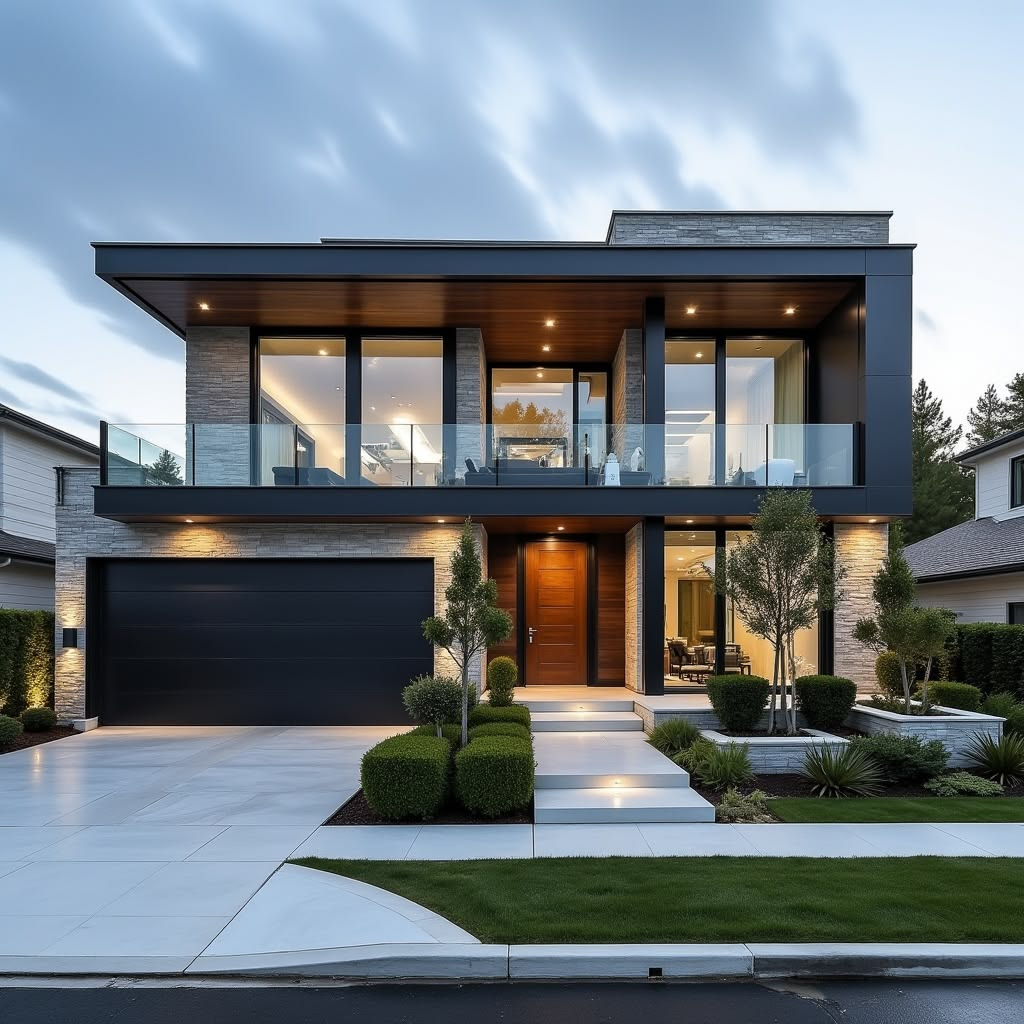
The Future of Housing and Construction
Solving the US housing shortage is the defining domestic economic challenge of this decade. We need a synchronized, cooperative effort across all levels of industry and government. This means overhauling archaic zoning laws that ban dense, multi-family housing in suburban areas. It requires embracing technological innovations in construction, such as modular building and 3D printing, to drive down the exorbitant costs of development. Furthermore, we must incentivize the development of trade schools to replenish the drastically depleted construction labor force.
Professionals across the spectrum—from urban planners and real estate developers to local tradesmen and mortgage analysts—must work collaboratively to maintain our current, aging housing stock while simultaneously creating millions of new homes for those desperate to buy. The American dream of homeownership is not dead, but it is deeply constrained by the realities of the US housing shortage.
If you are tired of sitting on the sidelines watching equity build for everyone else, the time for passive observation has passed. Start by conducting a comprehensive audit of your financial health, speak with a certified wealth management advisor to optimize your down payment strategy, and align yourself with a fiercely competent, data-driven real estate professional who understands the granular realities of your local market. Take the first step today: secure your financial pre-approval and begin charting your definitive path to homeownership in the modern market.