



Blockbuster rematch between Floyd Mayweather Jr. and Manny Pacquiao ‘almost’ agreed
Floyd Mayweather Jr. and Manny Pacquiao met in the ring in what was billed as the “Fight of the Century.”
Floyd Mayweather Jr. and Manny Pacquiao met in the ring in what was billed as the “Fight of the Century.” John Locher/AP
It’s been over 10 years since Floyd Mayweather Jr. and Manny Pacquiao clashed in what was billed the “Fight of the Century.”
And despite both being well into their 40s, we might be about to see a famous rematch between two of the best boxers of their generation.
Speaking to the Seconds Out YouTube channel, Pacquiao revealed that a rematch against Mayweather is “almost” agreed, with the two camps “in negotiations.”
“It depends on whether we can understand each other,” the Filipino said.
“My people and his people (are) directly coordinating.”
In their fight in 2015 in Las Vegas, Mayweather was victorious over Pacquiao by unanimous decision in one of the most highly anticipated bouts in boxing history.
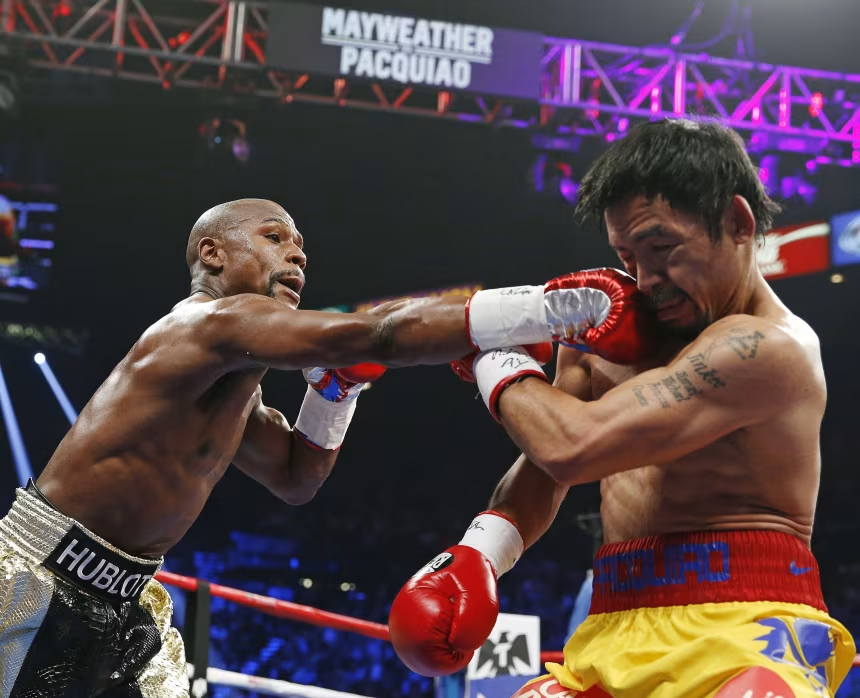
Pacquaio said after the 2015 fight that he had injured his shoulder during training in the lead-up to their clash, but is now unincumbered by any ailments. “It’s very interesting because, right now, I don’t have a shoulder problem,” he said.
Now, Pacquiao says the potential rematch will likely take place in Las Vegas but admits there were a “few conditions we’re still negotiating.”
“I’m sure the world of boxing will be excited if the rematch will push through,” the 46-year-old said.
Mayweather and Pacquiao could be set for a high-profile rematch.
Mayweather and Pacquiao could be set for a high-profile rematch. Kyodo/Getty Images
Pacquiao last fought professionally in July this year, ending a four-year retirement to challenge Mario Barrios for the WBC welterweight title. The bout ended in a draw meaning Barrios remained champion.
Conversely, Mayweather retired from professional boxing in 2017 with an undefeated 50-0 record.
Since then, the 48-year-old American has participated in exhibition bouts, last stepping into the ring against John Gotti III in 2024.
An exhibition fight between Mayweather and Mike Tyson has already been announced, but Pacquiao believes it won’t affect their negotiations.
“He has his own decision, so I cannot prevent him from fighting Mike Tyson,” he said.
Pacquiao revealed he’s also in talks with Vasiliy Lomachenko for an exhibition fight, but said that the rematch with Mayweather would be the priority, calling it a “real fight.”
The 2026 Toyota RAV4: Electrifying the American Icon, An Expert’s Deep Dive
The American automotive landscape is undergoing an electrifying transformation, and nowhere is this more evident than in the compact SUV segment. For decades, the Toyota RAV4 has been an undisputed king, a pragmatic choice for millions seeking reliability, efficiency, and utilitarian appeal. Now, as we navigate the rapidly evolving market of 2025, Toyota is making a bold, definitive statement with the 2026 RAV4: a vehicle that isn’t just embracing electrification, but embodying it. From my vantage point, having navigated the intricate shifts of this industry for over a decade, this isn’t just an update; it’s a strategic pivot designed to solidify the RAV4’s legacy in the electric age.
A Design Language that Commands Attention: Evolution, Not Revolution
First impressions matter, and the 2026 RAV4 immediately communicates its intent. Toyota’s designers have clearly walked a tightrope, evolving the aesthetic without alienating the loyal fanbase that appreciates its rugged yet refined demeanor. The exterior redesign is sharp, modern, and decidedly aggressive, yet it retains that quintessential RAV4 silhouette which is instantly recognizable on suburban streets and highway stretches across the nation.
Having critiqued countless model refreshes, I can attest that striking this balance is no small feat. The new front fascia features a more prominent grille, flanked by sleeker, more angular LED headlights that integrate seamlessly into the vehicle’s broader shoulders. The body lines are crisp, conveying a sense of athleticism and purpose. Wheel designs, often an afterthought, are thoughtfully executed, contributing to the overall contemporary vibe. This isn’t a radical departure that might confuse consumers; rather, it’s a confident progression, signaling a vehicle ready for the next generation without forgetting its roots. It’s a design that says, “I’m still the RAV4 you love, but I’ve hit the gym and invested in some new tech.” This visual upgrade is crucial for maintaining market share in an increasingly competitive segment where aesthetics play a significant role in consumer purchase decisions, particularly among younger buyers and those cross-shopping against more design-forward rivals.
The Hybrid-Only Mandate: A Glimpse into Toyota’s Electrified Future
The single most impactful decision Toyota has made for the 2026 RAV4 is its unwavering commitment to a hybrid-only powertrain strategy. This isn’t merely an option anymore; it’s the standard, a clear declaration of Toyota’s broader electrification ambitions and a response to escalating consumer demand for greener, more fuel-efficient transportation solutions. This bold move positions the RAV4 at the forefront of the mainstream hybrid SUV market, anticipating and shaping the buying habits of millions of Americans.
At the core of the standard hybrid model is a robust 2.5-liter inline-four engine seamlessly integrated with two electric motors. This synergy delivers a combined output of 236 horsepower – a respectable figure that ensures confident acceleration for daily commutes and highway passing alike. From an engineering standpoint, Toyota’s mastery of hybrid technology is undeniable. This third-generation iteration of their hybrid system is designed for optimal fuel economy without compromising on the power that drivers expect from a compact SUV. For those seeking even greater efficiency and the flexibility of electric-only range, the available plug-in hybrid (PHEV) option, likely continuing the “RAV4 Prime” designation, utilizes the same 2.5-liter engine but pairs it with a larger battery pack. This provides a substantially extended all-electric driving range, offering tangible PHEV benefits such as reduced trips to the gas station and eligibility for potential hybrid SUV tax credits – a major draw for environmentally conscious buyers and those looking to minimize their fuel economy compact SUV running costs.
However, a decade of test drives has taught me that pure numbers don’t tell the whole story. While the powertrain is undoubtedly efficient, the driving experience, as noted by many, remains “familiar.” The engine, when pushed, can still exhibit a somewhat “noisy and coarse” character, a minor quibble for an otherwise stellar system. Power delivery is adequate, not exhilarating, but perfectly suited for the intended function of a pragmatic family hauler. Toyota has prioritized reliability and efficiency, and on those fronts, the 2026 RAV4 hybrid powertrain delivers in spades, reinforcing its reputation for low depreciation hybrid SUV values and strong resale value Toyota RAV4. The refinement levels of the hybrid system are excellent, seamlessly transitioning between electric and gasoline power, an area where Toyota continues to lead the industry.
A Digital Renaissance: The Infotainment System America Demanded
Perhaps no single aspect of the 2026 RAV4 has received more universal praise than its comprehensively overhauled infotainment system. For years, Toyota’s in-car tech, while reliable, often lagged behind competitors in terms of responsiveness, intuitive design, and overall feature richness. That era is definitively over. The 2026 RAV4 ushers in Toyota’s latest Audio Multimedia system, a significant leap forward that finally brings the cabin up to par, if not ahead, of many segment rivals.
The centerpiece is a larger, vibrant touchscreen display that is crisp, responsive, and incredibly easy to navigate. Gone are the days of clunky menus and delayed responses. This new system boasts a “deep feature set,” including wireless Apple CarPlay and Android Auto, ensuring seamless smartphone integration. The integrated navigation, with its “strong map overlay,” is clear and provides real-time traffic updates. Voice assistance, now more natural and effective, allows drivers to control various functions without taking their hands off the wheel, enhancing both convenience and safety.
Beyond the main screen, the driver’s display has also received a significant upgrade. With multiple customizable screen options, drivers can tailor the information presented to their preferences, from traditional gauges to comprehensive hybrid system data or navigation directions. This level of customization and user-friendliness is a “night-and-day difference” and crucial for today’s tech-savvy consumers. This is a vital area for automotive connectivity solutions and is where smart automotive technology truly shines, elevating the daily driving experience and making the RAV4 feel genuinely modern. While some might argue it’s “not state of the art” compared to hyper-luxury brands, it’s a “much-needed catchup” that firmly places the RAV4 in contention as a leader in mainstream in-car tech.
Interior Design: Form and Function, A Matter of Personal Taste
The interior of the 2026 RAV4, like its predecessors, remains a topic that elicits varied opinions. Some appreciate the robust functionality of its multi-level center console, offering ample storage and thoughtful cubbies for everyday items. Others, however, find the design aesthetic somewhat “cluttered and distracting,” preferring a more minimalist approach. From my perspective, this divergence highlights a fundamental design philosophy: Toyota prioritizes practicality and rugged durability, catering to families and adventurers who demand functional storage and hard-wearing materials.
Materials are generally good for the segment, with soft-touch surfaces where it matters most, and durable plastics in high-traffic areas. Ergonomics are sound, with controls intuitively placed. Rear passenger space is ample, though some might find the rear door openings a tad shallow, potentially complicating ingress and egress for larger individuals or when installing child seats. Despite these minor criticisms, the overall cabin experience is one of solid construction and thoughtful utility, making it an excellent eco-friendly family car that can withstand the rigors of daily life. The split in opinion on design, however, showcases that while functionality is paramount, aesthetic cohesion still holds significant weight for many buyers seeking a premium compact SUV feel.
Safety Redefined: Toyota Safety Sense 4.0 Takes the Lead
In 2025, safety is not just a feature; it’s an expectation, a fundamental pillar of modern vehicle design. Toyota has always been at the forefront of automotive safety, and the 2026 RAV4 continues this legacy with the introduction of Toyota Safety Sense 4.0. This suite of advanced driver assistance systems (ADAS) is more comprehensive and refined than ever before, offering a heightened sense of security and confidence for both driver and passengers.
Key enhancements include improved radar and camera systems, leading to more accurate and reliable operation of features like pre-collision warning with pedestrian detection, lane departure alert with steering assist, and road sign assist. A standout new function is the automatic lane change assist, which, with a simple tap of the turn signal, can initiate and execute a lane change when conditions are safe and the adaptive cruise control and lane-keeping assist are engaged. This feature, while not revolutionary in the broader automotive landscape, is a significant convenience for a mass-market vehicle like the RAV4 and performed commendably during evaluations, confidently centering the SUV within its lane. This kind of sustainable automotive technology isn’t just about preventing accidents; it’s about reducing driver fatigue and making long journeys more comfortable. The reliability and sophistication of these systems are critical selling points in today’s market, as consumers increasingly prioritize robust safety packages.
Driving Dynamics: Consistency in a Changing World
For all its technological and design upgrades, the driving experience of the 2026 RAV4 largely maintains a sense of familiarity. This isn’t necessarily a drawback. For many buyers in this segment, predictable and effortless driving dynamics are a positive attribute. The ride quality is generally comfortable, if a bit “choppy” over rougher surfaces, yet it effectively “takes the hard edges off” more significant road imperfections. Steering is light and predictable, making urban maneuvering and parking a breeze, though it lacks the communicative feedback found in sportier rivals. Braking is competent and linear, offering consistent stopping power.
This driving character aligns perfectly with the RAV4’s target demographic: individuals and families prioritizing comfort, efficiency, and reliability over aggressive performance. It’s an easy vehicle to drive, requiring minimal mental effort, which makes it an excellent choice for daily commutes and family road trips. While some might yearn for a more engaging experience, the vast majority of RAV4 owners will appreciate its straightforward and dependable nature. It’s designed to be a workhorse, not a racehorse, and in that regard, it excels.
The Expert Verdict: A Formidable Contender, Not a Segment Shaker
After logging countless miles and scrutinizing every facet, my expert assessment of the 2026 Toyota RAV4 is clear: it represents a substantial evolution for Toyota, a confident stride into a more electrified and digitally integrated future. The hybrid-only powertrain strategy is a stroke of genius, solidifying its position as a leader in efficiency. The redesigned exterior is modern and appealing, and the revamped infotainment system is a long-overdue and immensely welcome improvement. The enhanced safety suite, with Toyota Safety Sense 4.0, further reinforces its reputation as a secure family vehicle.
However, while it is a major leap forward for Toyota, it doesn’t quite “shake up” the compact SUV segment in the way some might hope for. The driving dynamics, while perfectly adequate, don’t push the boundaries of performance or refinement. The interior, while functional, might still split opinions on its aesthetic. It’s not the segment’s flashiest or most overtly luxurious offering, nor is it the most thrilling to drive.
But here’s the crucial point: the RAV4 doesn’t need to be the leader in every single metric to be wildly successful. Its strength lies in its holistic package: unparalleled reliability, stellar fuel efficiency, advanced safety, now genuinely competitive technology, and a design that resonates with a broad audience. It’s a vehicle that consistently delivers on its promises, providing immense value and peace of mind. The 2026 RAV4 embodies the spirit of an enduring icon, adapting brilliantly to the demands of a new era. It’s more usable, more efficient, and more technologically advanced than ever before, firmly cementing its place as an indispensable option in the American automotive landscape.
Ready to experience the future of the American compact SUV?
The 2026 Toyota RAV4 represents a compelling blend of sustainability, cutting-edge technology, and legendary reliability. We invite you to explore its innovative features firsthand. Visit your local Toyota dealership today to schedule a test drive, delve deeper into its advanced hybrid powertrains, and discover how the new RAV4 can elevate your daily drive. Don’t just read about the future; drive it.